Regular purchases of equal amounts
beginner
Automated material · TradeAlmanac editorial deskPrepared by a language model from our stored data and checked by an editor.

The idea is simple: buy for the same amount at equal intervals, regardless of price.
What happens
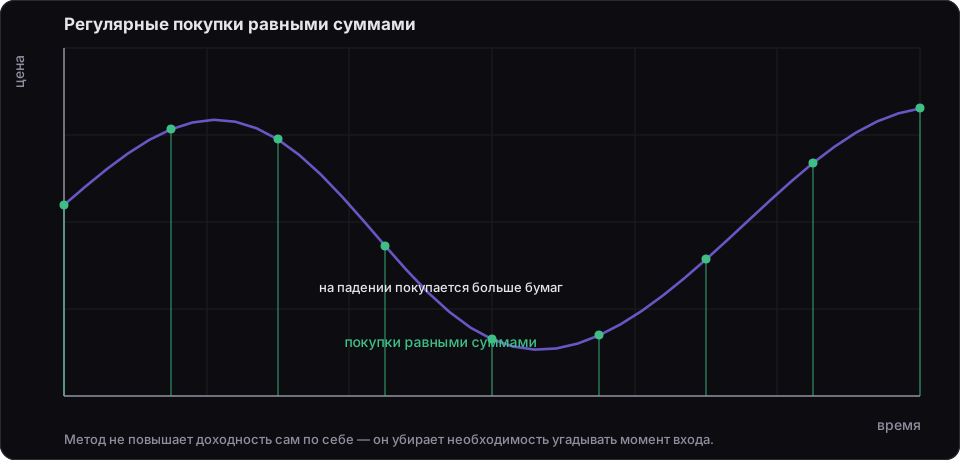
For a fixed sum a low price buys more securities and a high price buys fewer. The average purchase price ends up below the average price over the period.
What the method does not do
It does not raise expected returns. If the market rises steadily, a single purchase at the start delivers more — the money spends longer in the asset. Regular purchases lose in that scenario and win in one with a dip in the middle.
Where it is genuinely strong
In behaviour. A scheduled purchase requires no courage during a fall and no restraint during a rally — that is, it removes exactly the two decisions people most often get wrong. See Fear of missing out: why people buy at the highs.
Second, it matches how money actually appears: in instalments, alongside a salary, rather than as one lump sum.
Limitations
The method offers no protection against choosing the wrong asset. Regular purchases of a security whose business is deteriorating are a regular increase in a losing position. Diversification is mandatory here: Diversification: what it gives and what it does not.
Nor does it remove costs: frequent small trades raise the share of commission in every purchase — Fees: small numbers that decide the outcome.
Prepared by a language model from our stored data and checked by an editor.
How we use language modelsSimilar articles
- A first portfolio: what it is assembled fromNot a list of securities but an order of decisions: proportions first, then instruments, and only then specific tickers.
- How to tell investing from fraudFive signs, any one of which is enough to stop. None requires financial knowledge.
- Saving and investing: different jobs, different instrumentsPreserving and growing are not degrees of the same thing but opposite requirements of an instrument.
- Why past returns promise nothingA line from the disclaimer that almost everyone reads and almost nobody applies.