The key rate: how a Bank of Russia decision reaches your portfolio
2 min · beginner
Automated material · TradeAlmanac editorial deskPrepared by a language model from our stored data and checked by an editor.

Содержание · 5
The key rate is the rate at which the Bank of Russia supplies liquidity to banks and takes it back. It has no direct relationship to your account. Its indirect relationship decides everything.
Step one: banks
A bank that can borrow from the regulator at the key rate will not pay depositors materially more. Nor will it lend materially cheaper. The regulator's rate becomes the reference point for the price of money across the economy.
{{figure:key-rate-transmission|caption=Transmission is not instant: deposits react within weeks, credit and the economy within quarters}}
Step two: bonds
Here the link is the tightest and the most mechanical. The coupon on a bond already issued is fixed forever. If the price of money in the economy has risen, the old coupon has become unattractive — and the bond can adjust in only one way: by getting cheaper.
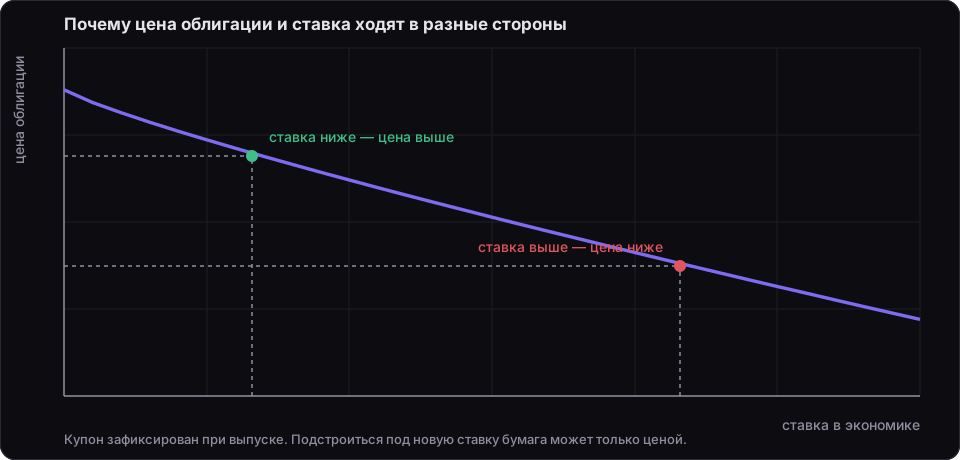
The longer the bond, the sharper the reaction. The measure of that sensitivity is duration.
Step three: equities
Here the link is weaker and works through two channels. Expensive money makes corporate borrowing dearer and cuts profit. And expensive bonds become a competitor to equities: if a risk-free instrument pays a decent return, the return demanded from a risky one rises, and the fair price of a share falls.
Step four: the rouble
A high rate makes rouble assets more attractive and supports the currency. This is the noisiest channel: the exchange rate also answers to the trade balance, to capital flows and to expectations.
What to watch rather than memorise
The current rate and the meeting dates are data, not knowledge. They live in the news feed and update themselves. The knowledge is understanding which channel fires first and what to look at after the decision.
More on the regulator's guidance: Central bank guidance: why the wording matters more than the decision.
Frequently asked
- Why does the market fall when the rate is left unchanged?
- Because prices had already absorbed an expected cut. A market reaction is the difference between what happened and what was expected, not the event itself.
- How quickly does a rate change reach the economy?
- Deposit rates move within weeks, lending rates within months, and the effect on inflation and growth shows up over several quarters.
Prepared by a language model from our stored data and checked by an editor.
How we use language modelsSimilar articles
- Sector sensitivity: who reacts how to macro conditionsThe same macroeconomic event lifts some industries and sinks others. The directions, one by one.
- Budget and taxes: the second lever alongside the rateThe state influences the economy not only through the policy rate but through spending and taxes — and that lever works differently.
- The yield curve: what the market thinks about the futureThe yields of issues of different maturities, lined up, show rate expectations better than any survey.
- The labour market: why strong employment can be bad newsA number that everyday logic always reads as good and market logic reads with a sign that depends on the phase.