The yield curve: what the market thinks about the future
advanced
Automated material · TradeAlmanac editorial deskPrepared by a language model from our stored data and checked by an editor.

Содержание · 3
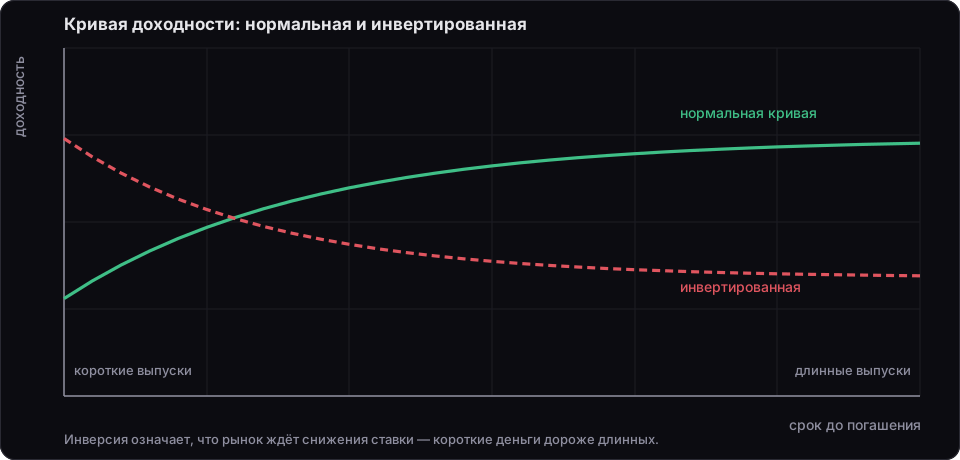
Take government bonds of different maturities and plot their yields against time to maturity, and you get a curve. Its shape is the market's compressed opinion about the future price of money.
The normal shape
Long money usually costs more than short: a lender parting with money for longer demands a premium for uncertainty. The curve slopes upwards.
Inversion
When short yields exceed long ones, the market expects rates to fall. That usually happens after the regulator has raised rates to fight inflation and participants judge that it will not have to hold them there for long.
Historically an inversion has often preceded an economic slowdown — but the link is statistical rather than mechanical, and the gap between signal and event is measured in quarters.
What it gives an investor
Three practical things.
A reference for choosing maturity. Under an inversion a long issue offers no term premium — so there is nothing paying you for duration risk: Duration: why long bonds fall harder.
An estimate of expectations. If your view of the future rate differs from what the curve embeds, that difference is your position.
A basis for comparison. A corporate issue's yield is compared not with an abstract figure but with a government issue of the same maturity; the gap is the premium for credit risk: OFZ and corporate bonds: what the premium pays for.
Prepared by a language model from our stored data and checked by an editor.
How we use language modelsSimilar articles
- Sector sensitivity: who reacts how to macro conditionsThe same macroeconomic event lifts some industries and sinks others. The directions, one by one.
- Budget and taxes: the second lever alongside the rateThe state influences the economy not only through the policy rate but through spending and taxes — and that lever works differently.
- The labour market: why strong employment can be bad newsA number that everyday logic always reads as good and market logic reads with a sign that depends on the phase.
- Deposit or bond: not the same thing at a similar yieldTwo fixed-income instruments are built differently, and the difference shows up exactly when it matters.