How to live through a drawdown without making decisions you regret
beginner
Automated material · TradeAlmanac editorial deskPrepared by a language model from our stored data and checked by an editor.

Содержание · 5
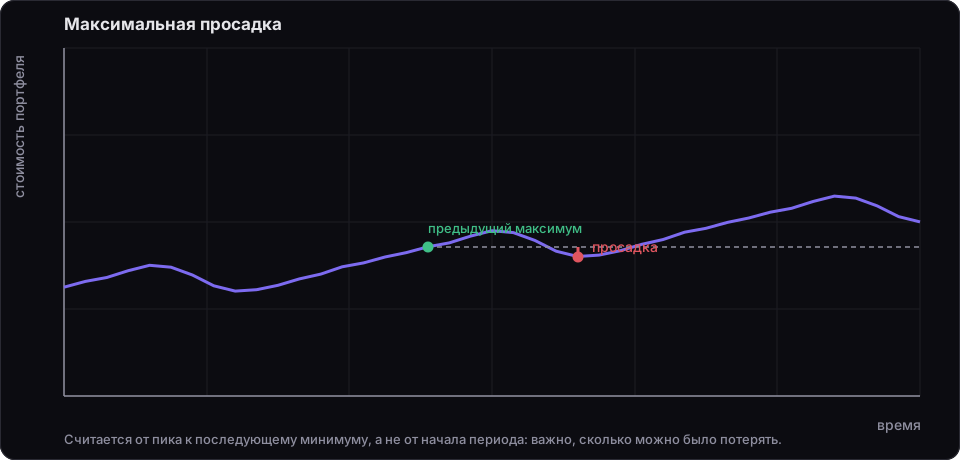
A drawdown is not an exceptional event but part of how markets normally behave. The problem is not the drawdown but the decisions made during it.
First: establish the scale
Falling with the market and one security falling are different events. The first requires no action on any particular position — The share fell: a sequence of questions instead of panic.
Second: check urgency
Will this money be needed soon? If not, the decision can wait. That is exactly why a reserve outside the market matters more than security selection: it turns a drawdown into an observation rather than a problem — A reserve outside the market: why it matters more than picking securities.
Third: look less often
Daily portfolio checks during a fall raise the chance of an impulsive sale and provide no information at all — The illusion of control: why activity feels useful.
Fourth: go back to your notes
The reason for the purchase, written in advance, answers whether anything changed in substance — A trading journal: why no learning happens without one.
Fifth: know your limit in advance
Tolerance for a drawdown is worth testing before one happens, and on a smaller amount. A portfolio you cannot hold through a fall is too risky for you regardless of the arithmetic — Asset allocation: the decision that shapes everything else.
Prepared by a language model from our stored data and checked by an editor.
How we use language modelsSimilar articles
- Anchoring: why the purchase price keeps influencing decisionsThe price you paid has no bearing on the security's future. The brain thinks otherwise.
- Herd behaviour: why a crowd is convincingAgreement from the majority feels like proof. In markets it more often signals that the price has already absorbed the consensus.
- The illusion of control: why activity feels usefulMore trades feel like more management. The effect on results runs the other way.
- Confirmation bias: why we only find arguments in favourAfter a purchase, attention selectively hunts for confirmation. That turns analysis into self-service.