Why the price of one share says nothing about the company
beginner
Automated material · TradeAlmanac editorial deskPrepared by a language model from our stored data and checked by an editor.

Содержание · 5
Comparing securities by the price of a single unit is the most common and the most quickly corrected mistake. Seeing once what the price is made of is enough.
Capitalisation, not price
The value of a whole company is the price of one share multiplied by the number of shares.
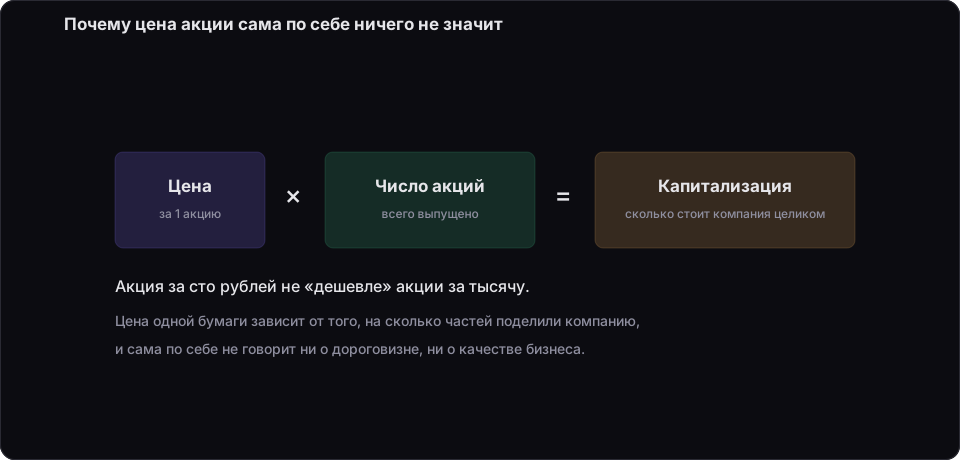
The same company can be divided into a million shares or a billion. In the first case the share is expensive, in the second it is cheap, and the company is exactly the same.
What a split does
Splitting shares increases their number and reduces the price of each proportionally. At the moment of the split the owner becomes neither richer nor poorer: more securities at a lower price.
How to compare properly
Not by price but by the ratio of price to something from the accounts — profit, revenue, equity. That is what multiples are for:
3,70
The details are in P/E: what it is and why low does not mean cheap.
A note on lots
Securities trade in lots on the exchange, and a lot may contain more than one share. That is another layer between the price on screen and the sum you will actually pay — and it has nothing to do with valuing the company either.
What to remember
Calling a share expensive or cheap is meaningless without relating it to business results. The only thing a three-digit or four-digit price tells you is how many shares were issued. On where to find the underlying data, see Where to find a Russian company's accounts.
Related instruments
Prepared by a language model from our stored data and checked by an editor.
How we use language modelsSimilar articles
- A first portfolio: what it is assembled fromNot a list of securities but an order of decisions: proportions first, then instruments, and only then specific tickers.
- How to tell investing from fraudFive signs, any one of which is enough to stop. None requires financial knowledge.
- Saving and investing: different jobs, different instrumentsPreserving and growing are not degrees of the same thing but opposite requirements of an instrument.
- Why past returns promise nothingA line from the disclaimer that almost everyone reads and almost nobody applies.